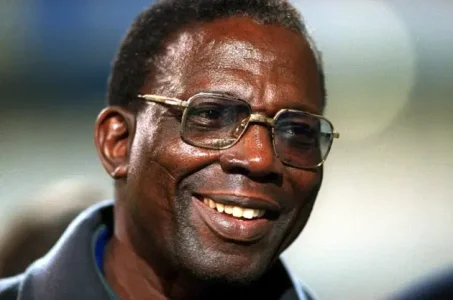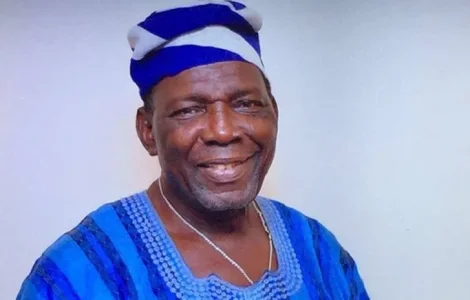
Adegboye Onigbinde, the first indigenous coach of Nigeria's Super Eagles, passed away on March 9, 2026, at the age of 88. His death marks the end of an era in Nigerian football, spanning over four decades of service as a coach, mentor, and administrator. From leading the national team to two World Cups to shaping the careers of countless players, Onigbinde left an indelible mark on the beautiful game in Nigeria and across Africa. Here are seven key things to know about the legendary tactician.
- He Coached Nigeria Across Two Different Eras, Decades Apart: Onigbinde handled the Super Eagles between 1982–1984 and again in 2002, a rare feat in Nigerian football history that spanned two distinct generations of players.
- He Led Nigeria to the 1984 AFCON Final: Under his guidance, Nigeria reached the Africa Cup of Nations final in Ivory Coast, finishing as runners-up after a 3-1 loss to Cameroon.
- He Took Shooting Stars to the African Club Final: In 1984, Onigbinde coached Shooting Stars Sports Club (3SC) to the Africa Club Champions Cup final, where they narrowly lost to Egyptian giants Zamalek.
- He Managed Nigeria at the 2002 FIFA World Cup: Onigbinde stepped in after the dismissal of the previous coaching crew and led the Super Eagles to the Korea/Japan World Cup, where Nigeria faced Argentina, Sweden, and England.
- He Trusted Young Players, A Decision That Sparked Debate: At the 2002 World Cup, he fielded a squad largely made up of young, relatively inexperienced players, a bold choice that divided opinion in Nigerian football circles.
- He Was Criticized by Star Players but Proved His Eye for Talent: After the tournament, players like Jay-Jay Okocha and Julius Aghahowa questioned his squad selection. However, several of the young players he introduced went on to become long-term Super Eagles stars.
- He Served as a Global Football Instructor and Cultural Icon: Onigbinde worked as a technical instructor for FIFA and CAF, mentoring coaches across Africa. He also dropped his colonial name "Festus" in 1960, choosing Adegboye, meaning "a child born to reclaim a chieftaincy title." He passed away on March 9, 2026, at 88.
Sources: Complete Sports, Soccernet