
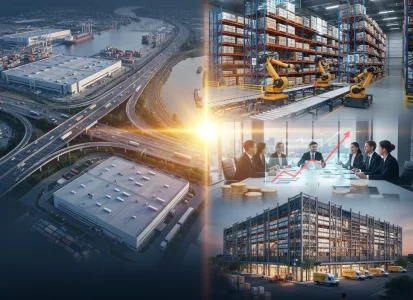
The industrial real estate market has experienced dramatic shifts over the past decade, with property values fluctuating in response to evolving economic conditions, technological advancements, and changing business practices. Understanding the forces that drive these valuations has become increasingly important for investors, developers, and business owners seeking to make informed decisions in this dynamic sector.
Location and Proximity to Transportation Networks
Geographic positioning remains one of the most critical determinants of industrial property value. Facilities located near major highways, rail lines, ports, and airports command premium prices due to the logistical advantages they offer. The rise of e-commerce has particularly amplified the importance of last-mile distribution centers situated close to urban population centers. Properties within a 50-mile radius of major metropolitan areas have seen valuations increase by approximately 30 to 40 percent over the past five years, according to commercial real estate data. This proximity allows businesses to meet consumer expectations for rapid delivery while minimizing transportation costs.
Conversely, industrial properties in remote locations or areas with poor infrastructure access have struggled to maintain their value. The efficiency gains from strategic positioning have become so significant that many companies are willing to pay substantially more for facilities that can shave hours off their supply chain operations. This geographic premium has fundamentally reshaped industrial real estate investment strategies across the country.
Technological Infrastructure and Modern Amenities
The digital transformation of manufacturing and warehousing operations has created new value drivers for industrial properties. Facilities equipped with high-speed internet connectivity, advanced electrical systems capable of supporting automation equipment, and modern climate control systems are significantly more valuable than older structures lacking these features. Properties with clear ceiling heights exceeding 32 feet, which accommodate modern racking systems and automated storage solutions, can command rental premiums of 15 to 25 percent compared to older warehouses with lower clearances.
Energy efficiency has emerged as another crucial factor affecting property valuations. Industrial facilities with LED lighting systems, solar panels, and efficient HVAC systems reduce operational costs and appeal to environmentally conscious tenants. Some industrial lighting upgrades alone can reduce energy consumption by 50 to 70 percent, making properties with these improvements more attractive and valuable. Smart building technologies that optimize energy usage and provide real-time monitoring capabilities have become expected features in premium industrial spaces.
Economic Cycles and Interest Rate Fluctuations
Broader economic conditions exert considerable influence over industrial property values. During periods of economic expansion, increased manufacturing activity and consumer spending drive demand for warehouse and production space, pushing values upward. The industrial sector has proven relatively resilient compared to other commercial real estate categories, but it remains vulnerable to economic downturns that reduce manufacturing output and logistics activity.
Interest rate movements directly impact property valuations through their effect on capitalization rates and financing costs. When the Federal Reserve raised interest rates aggressively between 2022 and 2023, industrial property values experienced downward pressure as investors demanded higher returns to compensate for increased borrowing costs. Properties that were purchased with low fixed-rate financing during the low-interest environment of 2020 and 2021 maintained stable values better than those requiring refinancing at higher rates.
E-Commerce Growth and Changing Space Requirements
The explosive growth of online retail has fundamentally altered industrial property demand patterns and valuations. E-commerce fulfillment requires substantially more warehouse space per dollar of sales compared to traditional retail distribution, with estimates suggesting three times the square footage is needed. This structural shift has created sustained upward pressure on industrial property values, particularly for facilities suitable for fulfillment operations.
The pandemic accelerated e-commerce adoption by several years, compressing what might have been a gradual transition into a sudden surge. Industrial properties that could be quickly adapted for fulfillment purposes experienced rapid appreciation, while facilities designed for traditional manufacturing or bulk storage saw more modest value growth. Markets with strong e-commerce presence, such as the Inland Empire in California and central New Jersey, have experienced some of the most dramatic industrial property value increases in the nation.
Regulatory Environment and Zoning Restrictions
Local regulations significantly impact industrial property values through their effect on supply constraints and permissible uses. Communities with restrictive zoning that limits new industrial development or requires extensive environmental reviews create artificial scarcity that elevates existing property values. Conversely, areas with streamlined permitting processes and abundant industrially zoned land may experience more moderate value appreciation due to increased competition from new construction.
Environmental regulations have also affected valuations, particularly for properties with potential contamination issues or those requiring expensive remediation. Clean properties with documented environmental compliance command premium pricing compared to sites with uncertain environmental status. As sustainability requirements become more stringent, properties that already meet or exceed these standards have seen their relative value increase compared to facilities requiring significant upgrades to comply with new regulations.
The industrial real estate landscape continues evolving in response to technological innovation, demographic shifts, and economic transformation, ensuring that property values will remain dynamic in the years ahead.