
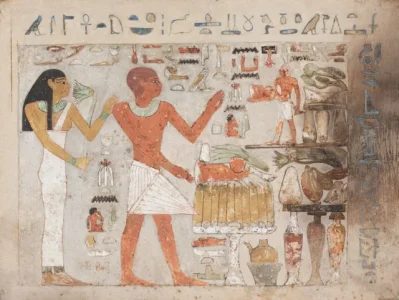
When we think of Ancient Egypt, the first images that come to mind are pyramids, pharaohs, and the Nile. Its influence on Western society, through art, architecture, religion, and philosophy, is well known. Less discussed, however, is how Egypt may have shaped societies in Africa itself, particularly here in Nigeria. Scholars and historians have long debated whether Ancient Egypt left enduring cultural footprints in West Africa, especially among the Yoruba people.
Reverend Samuel Johnson, the 19th-century historian from Oyo, argued that the Yoruba trace their origins not from Mecca, as popular folklore claims, but from Northeast Africa. Johnson suggested that Yoruba ancestors may have migrated from Egypt, carrying with them religious practices, artistic traditions, and social structures. Supporting this idea, Archdeacon Olumide Lucas highlighted similarities between Yoruba and Egyptian rituals and symbols, as well as their worship of deities, suggesting cultural echoes that survived the centuries.
Expanding the conversation to a continental scale, Cheikh Anta Diop, the renowned Pan-African historian, underlined the plausibility of cultural diffusion from Egypt to other African regions, including West Africa, by showing how Egyptian ideas and practices influenced neighboring societies. Comparative religion scholar Edward Geoffrey Parrinder also noted parallels between Yoruba spiritual systems and those of ancient North Africa, particularly in the belief in many gods and ritual performance. Even archaeological echoes, like the bronze sculptures of Ile-Ife, have been compared to Egyptian art by Johnson and other scholars, hinting at shared aesthetics or symbolic thinking.
Ancient Egypt Throughout the World
The connection between Egyptian culture and West Africa underlines the extent of this ancient society’s influence on the world. Undeniably, it has traveled the globe. As such, interest in this period remains high, and the wider public is quick to indulge in opportunities to explore Ancient Egypt further. For example, recent immersive experiences like Tutankhamun: The Immersive Exhibition in London proved to be hugely popular as visitors got in-depth insight through fascinating interactive displays, fun VR adventures, and holographic exhibitions.
More broadly, this ancient civilization’s impact on aspects of today’s society, from internationally successful movies and TV shows to pop music like The Bangles’ Walk Like an Egyptian, show how compelling mythical Egyptian history continues to be. It has even influenced online slots with iGaming favorites like Kingdom of Horus, evoking the period with iconic symbols such as the Sphinx and scarabs adorning the reels.
In Nigeria today, this influence can be seen most directly in religious practices and artistic expression, especially within Yoruba traditions, which carry echoes of Egyptian ideas. The system of kingship, with its sacred rituals and elaborate ceremonies, mirrors the way pharaohs were revered, while festivals, dances, and the use of symbolic objects show parallels with Egyptian spirituality. Even names, language, and artistic styles, such as the famous bronze heads of Ile-Ife, hint at shared cultural roots.
A Deeply Interconnected Past
The similarities in religion, governance, art, and social rituals point to a remarkable connection between Ancient Egypt and Nigeria. This is most prominent among the Yoruba. It is in this community that the echoes of Egyptian culture remind us most acutely that Africa’s past is deeply interconnected, vibrant, and still alive today.