If you’ve ever stared at spinning reels the way a fan stares at a last-second free throw, you’re not alone. The big question—how do slot machines work—feels like a backstage mystery: lights flash, symbols dance, and somehow a win (or a near-miss) appears right on cue. But here’s the good news: once you understand the hidden “referee” inside every slot game, the whole spectacle becomes way less magical and way more logical. In this guide, we’ll break down how do slots work in plain English: what actually decides a result, why every spin is its own fresh contest, and how reels, paylines, and paytables turn random numbers into the outcome you see on screen—without the myths, without the smoke, and without the conspiracy theories that haunt casino floors like bad commentary in overtime casino slot games.
What Actually Decides a Spin?
A spin is decided by a Random Number Generator (RNG)—not by your timing, not by the previous player, not by whether the machine is “hot,” and definitely not by a casino employee secretly pressing a “make them lose” button.Think of it like a game clock that never stops running. The RNG is constantly generating numbers in the background, and the instant you hit Spin, the system grabs a number (or a sequence of numbers) and uses it to determine the outcome. Regulators in major markets explicitly require that outcomes be “acceptably random” and that games use the random inputs as intended, according to published rules and probabilities.
RNG in simple terms (the “decision engine”)
Here’s the simplest way to picture it: the RNG is a nonstop number machine. It doesn’t “remember” what happened a moment ago, and it doesn’t “care” what you’re betting. When you initiate the spin, the game captures an RNG output and then translates it—by the game’s internal mapping rules—into reel positions and symbol combinations. That same core idea applies whether you’re tapping a phone screen or pulling a lever on a physical cabinet: the animation is the show, but the RNG is the scoreboard.And this is the part players love to argue about, so let’s call it clean: each spin is independent. No spin is “due.” A slot can’t get tired of paying out, and it can’t build up “owed wins.” It’s more like flipping a coin than taking turns in a scripted storyline: yesterday’s flip doesn’t force today’s result.
Slot Machine Mechanics 101: Reels, Symbols, Paylines, and Paytables
Now let’s talk about what your eyes see versus what the machine uses. On the surface, slots look like a simple reel party: symbols line up, a melody plays, and the cabinet reacts like you just hit a game-winning shot. Underneath, though, it’s a structured system—reels are visual representations, paylines define which patterns count, and the paytable is the official rulebook that decides what gets paid and why.What players see: reels, symbols, paylines
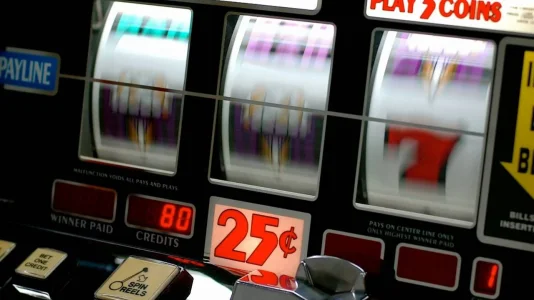
The reels are the moving columns of symbols—classic slot theatre. Symbols are the characters in the cast: low-value icons, premium icons, wilds, scatters, bonus triggers, and everything in between.Paylines are the “scoring lanes.” In older-style games, you might have a fixed number of paylines. In others, paylines can be adjustable, meaning you choose how many scoring paths are active (depending on the game). Modern formats often use ways-to-win instead of traditional paylines: you win by landing matching symbols on consecutive reels, regardless of the exact line path. And some newer designs use cluster pays, where wins come from groups of matching symbols touching each other, rather than lining up across reels. Different presentation, same big idea: the game has defined patterns that qualify as a win.
What the game uses: paytable + rules
If reels are the highlight reel, the paytable is the rulebook the officials are actually enforcing. It maps symbol combinations to payouts, explains how wilds substitute (or don’t), what scatters do, and exactly how bonus features trigger. It also defines the logic behind multipliers, free spins, expanding symbols, respins—whatever the game is built to do.This matters because the paytable isn’t just decoration. In regulated environments, rules must be available before play and the mapping from random inputs to outcomes should follow those stated rules and probabilities—no adaptive “on-the-fly” behavior that changes fairness midstream.
How Slots Work Under the Hood: From RNG Number → Reel Result
Alright—headsets on, we’re going into the production truck.A spin starts when the player stakes a bet—basically setting the “price of admission” for that round. The moment the player hits spin, the game captures RNG output. That random result doesn’t appear on screen as a raw number; instead, the slot software maps it to reel positions using the game’s internal layout—often involving virtual reel logic, not just what’s physically displayed. Then the game evaluates the final symbol arrangement against its rules: paylines, ways-to-win, cluster requirements, and any feature conditions like scatters or bonus symbols. If the result qualifies as a win, the payout is awarded as credits, and the machine moves on—ready for the next independent contest. In UK guidance, for example, the mapping of random inputs to outcomes is expected to align with the game’s published probabilities and paytables, and random numbers are to be used as received rather than discarded for adaptive behavior.
Step-by-step “spin flow”
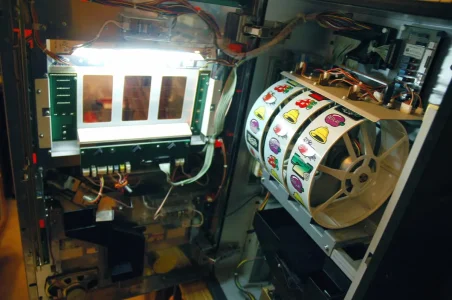
Picture it like a play-by-play sequence: you place your stake, you press spin, and at that instant the RNG provides the “official call.” The system captures that output and translates it into reel stops using the game’s internal mapping. The reels spin as an animation to reveal what’s already been determined. When the reels settle, the slot checks the result against its win rules—lines, ways, clusters, plus any special features. Finally, if the outcome is a winner, the game pays in credits based on the paytable. And then—new round, new randomness, no carryover momentum.Virtual reels and why jackpots are rare
Here’s where the “more than meets the eye” part really earns its spotlight. In many modern slots, the reels you see are not a literal list of equal-probability stops. Instead, the game can use virtual reel mapping—meaning there may be far more possible stop positions in the background than are visibly represented on the reel face. That allows common symbols to appear more frequently (mapped to more virtual stops) and rare symbols—like jackpot icons—to be mapped to fewer stops. The result is a controlled symbol frequency that shapes hit rates and makes top prizes genuinely rare, even if the reel looks like it has only a handful of positions.RTP and House Edge: The Math That Shapes Long-Run Results
Let’s take a timeout and talk numbers—because this is where a lot of players get faked out by a flashy scoreboard. RTP (Return to Player) is often shown as a percentage, and it sounds like a promise. It isn’t. Think of RTP like a season-long statistic: over a massive number of spins—millions, even more—the game is designed to return roughly that portion of wagers back to players as winnings. But a single session? That’s one game on the schedule, not the whole season. You can run hot, you can go cold, and you can do both in the same coffee break.RTP explained without hype
RTP is a long-run average, not a “cashback guarantee.” If a slot lists 96% RTP, it means that over a very large sample, the math model aims for about 96 units returned for every 100 wagered—on average. Your real experience in the moment can swing wildly because randomness doesn’t care about your weekend plans. That’s why two people can play the same title: one walks out whistling, the other walks out saying the machine “ate” their money. Same rules, different variance, different timing, different outcome.
Volatility (variance): why two 96% RTP slots can feel different
Now here’s the twist that makes this whole league interesting: two games can share the same RTP and feel like completely different sports. Volatility (also called variance) describes how bumpy the ride is. Low volatility games tend to hand out smaller wins more often—like a team that grinds out steady points. High volatility games pay less frequently, but when they connect, they can land a highlight-reel hit. That difference matters for bankroll swings: if your budget is limited, high volatility can feel like long stretches of nothing, because the math is saving the fireworks for rarer moments.Key Terms You’ll See in Any Slot Game
Term | What it means | Why it matters |
| RNG | Generates unpredictable numbers used to decide outcomes | Reinforces that each spin is independent |
| Reel mapping / virtual reels | Converts RNG outcomes into reel stop positions | Controls symbol frequency and rarity |
| Paytable | Rules for payouts, features, and symbols | Shows what wins exist and how they trigger |
| RTP | Long-run expected return across huge samples | Helps compare games over time |
| Volatility | How “swingy” results feel in the short run | Impacts risk, session length, and bankroll |
Myths vs reality
- “Machines are due.” Reality: each spin is its own event; past results don’t stack up like a comeback meter.
- “The casino changes results mid-spin.” Reality: in regulated markets, games are tested and certified; the outcome is determined when the spin is initiated, and the reel show is just the reveal.
- “If I stop the reels at the right time, I can control it.” Reality: stopping animations doesn’t rewrite the underlying outcome.
- “Bigger bets increase my chance of winning.” Reality: usually the bet changes payout size, not the chance of landing a winning combination (exact behavior can vary by game rules).
- “Near-misses mean a jackpot is coming.” Reality: near-misses are a design and math effect, not a prediction.
- “A new machine pays more.” Reality: payout behavior is driven by the game’s rules and randomness, not its age or fresh paint.
- “One ‘lucky’ button is better than another.” Reality: buttons trigger the same process; they don’t summon different odds.
Practical checklist before you spin
- Open the paytable and read how wins are counted.
- Check RTP if it’s displayed (use it for comparison, not prophecy).
- Identify volatility so you know whether you’re signing up for steady singles or rare home runs.
- Confirm whether it’s paylines, ways-to-win, or cluster pays.
- Understand wilds, scatters, and bonus triggers before you start chasing features.
- Set a session budget and a firm stop point—like a coach with a game plan.
- Keep your stake consistent while you learn the game’s rhythm.
- Treat bonus rounds as variance, not a guarantee of profit.
Online vs Land-Based Slots: What’s the Same and What’s Different?
Some players swear there’s a secret difference between tapping a screen at home and pulling a lever on a casino floor. Let’s call this like a clean replay review: the core logic is mostly the same, but the experience around it can vary.What’s the same: RNG-driven outcomes + paytable logic
Whether it’s a cabinet in a casino or a digital title on your phone, the foundation is the same playbook: a random outcome is generated, mapped to a result, and evaluated by the paytable rules. The big concept doesn’t change—randomness drives the result, and the paytable defines what counts as a win and what it pays.What can differ: interface speed, feature sets, display of RTP
What can change is the presentation: online games may show RTP more often, and they may pack in extra features, side bets, buy-bonus options, or faster spin settings. Land-based machines may feel different because of pacing, environment, and physical feedback. But the key point stays steady: the spinning reels are an animation that reveals the already-decided outcome—like the slow-motion replay after the whistle.Responsible Play Note
Slots are entertainment—bright lights, quick decisions, big emotions. Treat them like you’d treat a live game: fun when you’re in control, a problem when you’re chasing a score that isn’t there. Set limits, take breaks, and pace yourself. If the session stops feeling enjoyable, that’s your cue to step away—no shame, just smart play.