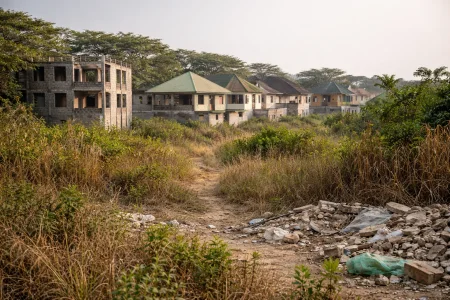
Snake bite is often treated as a rare accident or an unusual emergency. In reality, it is a persistent public health burden in Nigeria, shaped by geography, livelihoods, and access to care rather than chance. Understanding its scale helps shift the conversation from fear to preparedness.
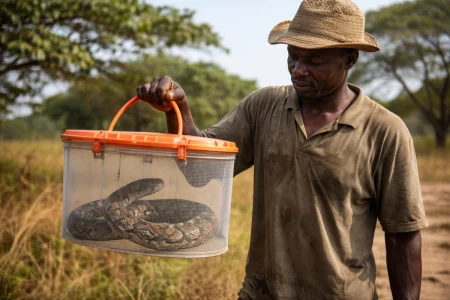
Available Nigerian estimates, cited in recent analyses and professional communiqués, suggest that around 43,000 snakebite cases occur each year, with approximately 1,900 deaths annually. Public health experts widely agree these figures are underestimates, as many bites and deaths are never formally recorded, particularly when care is sought outside hospitals.
Snake bites are not evenly distributed across the country. Incidence is highest in savanna regions, where farming, herding, and bush travel bring people into frequent contact with snake habitats. In parts of the Benue Valley, studies have estimated annual bite rates as high as 497 per 100,000 people, well above national averages.
These are not isolated events. In some rural hospitals during peak seasons, snakebite patients can occupy over 10% of available beds, placing strain on already limited health resources. This pattern underscores that snakebite is not merely a medical issue but a systemic challenge.
Across West Africa, snakebite envenoming is estimated to cause between 10,000 and 100,000 serious cases and 1,000 to 10,000 deaths each year. Nigeria alone accounts for about 43% of the region’s total disability burden from snakebite, measured in disability-adjusted life years.
Globally, the World Health Organisation estimates that 81,000–138,000 people die annually from snakebite envenoming, with hundreds of thousands more left with long-term disability. Within sub-Saharan Africa, Western regions that include Nigeria show some of the highest mortality rates per population.
Despite its scale, snakebite has historically received far less attention than other infectious and environmental health risks. It has now been formally classified by the WHO as a neglected tropical disease, reflecting years of underinvestment in surveillance, access to treatment, and prevention.
In Nigeria, professional bodies have described snakebite envenoming as a neglected public health emergency, pointing to under-reporting, uneven antivenom supply, and limited integration into emergency care planning. While recent efforts have improved awareness, the overall burden remains largely invisible in national health conversations.
Available Nigerian estimates, cited in recent analyses and professional communiqués, suggest that around 43,000 snakebite cases occur each year, with approximately 1,900 deaths annually. Public health experts widely agree these figures are underestimates, as many bites and deaths are never formally recorded, particularly when care is sought outside hospitals.
How common are snake bites in Nigeria?
Snake bites are not evenly distributed across the country. Incidence is highest in savanna regions, where farming, herding, and bush travel bring people into frequent contact with snake habitats. In parts of the Benue Valley, studies have estimated annual bite rates as high as 497 per 100,000 people, well above national averages.
These are not isolated events. In some rural hospitals during peak seasons, snakebite patients can occupy over 10% of available beds, placing strain on already limited health resources. This pattern underscores that snakebite is not merely a medical issue but a systemic challenge.
Nigeria’s share of a regional problem
Across West Africa, snakebite envenoming is estimated to cause between 10,000 and 100,000 serious cases and 1,000 to 10,000 deaths each year. Nigeria alone accounts for about 43% of the region’s total disability burden from snakebite, measured in disability-adjusted life years.
Globally, the World Health Organisation estimates that 81,000–138,000 people die annually from snakebite envenoming, with hundreds of thousands more left with long-term disability. Within sub-Saharan Africa, Western regions that include Nigeria show some of the highest mortality rates per population.
Why is snakebite called a “neglected” health issue
Despite its scale, snakebite has historically received far less attention than other infectious and environmental health risks. It has now been formally classified by the WHO as a neglected tropical disease, reflecting years of underinvestment in surveillance, access to treatment, and prevention.
In Nigeria, professional bodies have described snakebite envenoming as a neglected public health emergency, pointing to under-reporting, uneven antivenom supply, and limited integration into emergency care planning. While recent efforts have improved awareness, the overall burden remains largely invisible in national health conversations.
Why this matters
Snake bites in Nigeria are predictable, measurable, and concentrated, not random or rare. Seeing them clearly as a public health issue — rather than a series of isolated incidents - is the first step toward reducing deaths and disability. Understanding the scale helps explain why prevention, access to care, and system readiness matter as much as the magnitude of the bite itself.