Many Nigerians know someone with “sugar” or “BP”. Fewer realise how often the two conditions appear together, quietly, persistently, and with shared roots. In some Nigerian clinic studies, more than half of people living with type 2 diabetes also have high blood pressure, and many people first diagnosed with hypertension later develop diabetes.
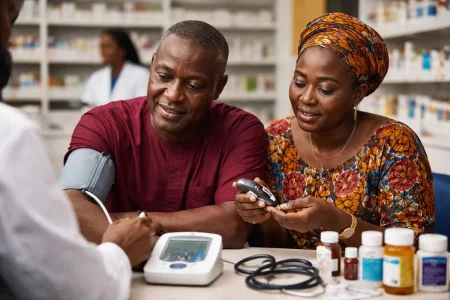
They are often treated as separate problems, handled with different drugs, different clinics, and different levels of urgency. In reality, they are closely connected, shaped by the same pressures in the body and in everyday Nigerian life.
Understanding this link matters because when one condition is missed or poorly controlled, the other rarely stays stable for long.
Shared damage in the body
Cost also plays a major role. When medicines are expensive or hard to access, people may focus on one condition and ignore the other, or stop treatment when they start feeling better.
Poor-quality or fake medicines further complicate things. They can create the impression that treatment “doesn’t work”, when in reality the drug may be weak, inconsistent, or taken on and off because of cost.
That is why regular checks for both blood pressure and blood sugar matter, especially for people with a big tummy, a family history of either condition, or past pregnancy-related high blood pressure.
Clear information, affordable treatment, and family support protect far more than occasional intense effort. Clarity, not fear, is what helps people live longer and better with both conditions.
They are often treated as separate problems, handled with different drugs, different clinics, and different levels of urgency. In reality, they are closely connected, shaped by the same pressures in the body and in everyday Nigerian life.
Understanding this link matters because when one condition is missed or poorly controlled, the other rarely stays stable for long.
What’s really going on
Shared damage in the body
- Both conditions damage blood vessels, though in different ways
- High blood sugar gradually stiffens and weakens arteries
- High blood pressure strains blood vessels and vital organs over time
- High blood pressure often travels with insulin resistance, making it harder for the body to use insulin properly
- Excess weight, especially around the tummy, increases risk for both conditions
- Diets high in salt mainly worsen blood pressure
- Refined carbohydrates and sugary drinks mainly worsen blood sugar and weight
- Long hours of sitting, in traffic or at work, worsen control of both
- Chronic stress raises blood pressure and blood sugar together
- Treating only diabetes or only hypertension often leaves the other uncontrolled
- Having both greatly increases the risk of stroke, heart attack, kidney failure, and early death
Why is this often missed in Nigeria
Diabetes and hypertension rarely cause early pain. Many people are treated repeatedly for malaria, fatigue, or “body weakness” while the real problem goes undetected. In many Nigerian studies, people living with diabetes or hypertension report years of vague symptoms and repeated malaria treatment before the correct diagnosis is made.Cost also plays a major role. When medicines are expensive or hard to access, people may focus on one condition and ignore the other, or stop treatment when they start feeling better.
Poor-quality or fake medicines further complicate things. They can create the impression that treatment “doesn’t work”, when in reality the drug may be weak, inconsistent, or taken on and off because of cost.
How to think about it going forward
Diabetes and hypertension are not two separate battles. They are closely linked conditions driven by many of the same forces in the body and in everyday life. Managing them is less about perfection and more about steadiness.That is why regular checks for both blood pressure and blood sugar matter, especially for people with a big tummy, a family history of either condition, or past pregnancy-related high blood pressure.
Clear information, affordable treatment, and family support protect far more than occasional intense effort. Clarity, not fear, is what helps people live longer and better with both conditions.